
 Editorial Team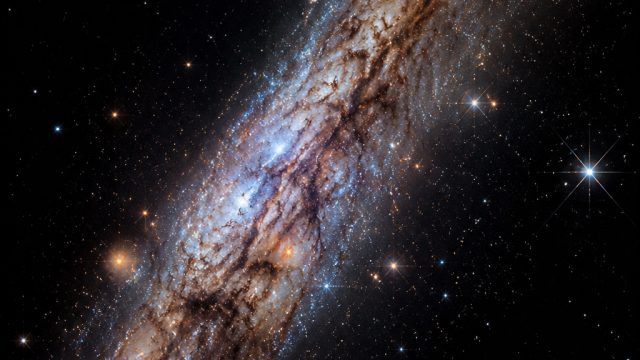
In a groundbreaking advancement for astronomy, NASA's James Webb Space Telescope (JWST) has successfully identified millions of stars within the enigmatic Cigar Galaxy, also known as M82. This new discovery not only enhances our understanding of star formation but also highlights the incredible capabilities of the Webb Telescope as it continues to redefine our cosmic knowledge.
Understanding the Cigar Galaxy
The Cigar Galaxy, located approximately 12 million light-years away in the constellation Ursa Major, is characterized by its unusual shape resembling a cigar. It is a starburst galaxy, meaning it is undergoing an intense period of star formation. The observations made by Webb highlight the galaxy's rich stellar population and the dynamic processes at play.
Why This Discovery Matters
With its advanced infrared capabilities, the Webb Telescope is capable of peering through cosmic dust clouds that often obscure our view of stellar activity. This is particularly important for the Cigar Galaxy, where conditions are ripe for star formation. By mapping out the millions of stars, astronomers hope to glean insights into:
- Star Formation Processes: Understanding how stars form in such dense environments can inform theories about star evolution.
- Galactic Evolution: The findings may shed light on how galaxies like M82 evolve over time, influencing our understanding of galaxy formation in the universe.
- Comparative Studies: By comparing the star formation rates in Cigar Galaxy with other galaxies, researchers can identify unique characteristics and evolutionary paths.
The Role of the Webb Telescope
Launched in December 2021, the Webb Telescope is the most powerful space telescope ever built. Its ability to analyze infrared light allows it to observe celestial objects that are invisible to optical telescopes, such as Hubble. This ability has proven crucial in studying various astronomical phenomena, especially in high-density regions like M82.
Technical Advancements
The Webb Telescope's state-of-the-art instruments play a pivotal role in its observations. The Near Infrared Camera (NIRCam) and the Mid-Infrared Instrument (MIRI) provide scientists with detailed images that reveal previously hidden stars and complex star systems. This technology was integral to the recent observations of the Cigar Galaxy, enabling astronomers to:
- Map Star Density: The density of stars in M82 was meticulously mapped, showing areas of high and low stellar concentration.
- Analyze Stellar Composition: By studying the light emitted from these stars, scientists can determine their chemical composition and age.
- Examine Stellar Interactions: The Webb observations allow researchers to see how stars within this galaxy interact with one another, providing insights into their lifecycle.
Implications for Future Research
The discoveries made by the Webb Telescope in the Cigar Galaxy set the stage for a plethora of future research opportunities. As astronomers continue to analyze the data, several implications arise:
- Enhanced Knowledge of Star Life Cycles: Understanding the life cycles of stars in such active environments could refine current models of stellar evolution.
- Broader Galactic Context: Insights gained from M82 may reveal broader patterns applicable to other galaxies, contributing to our overall understanding of the universe.
- Technological Innovations: The success of Webb’s observations may drive further technological advancements in telescope design and data analysis, paving the way for even deeper cosmic explorations.
Conclusion
The recent revelations by NASA’s Webb Telescope regarding the Cigar Galaxy mark a significant milestone in astronomical research. As we continue to unlock the secrets of the cosmos, discoveries like these not only enrich our scientific knowledge but also inspire future generations of astronomers. The ongoing exploration of galaxies and their stars will undoubtedly reveal new truths about our universe, making this an exciting time for science enthusiasts and researchers alike.

 published on 2026-07-10