
 Editorial Team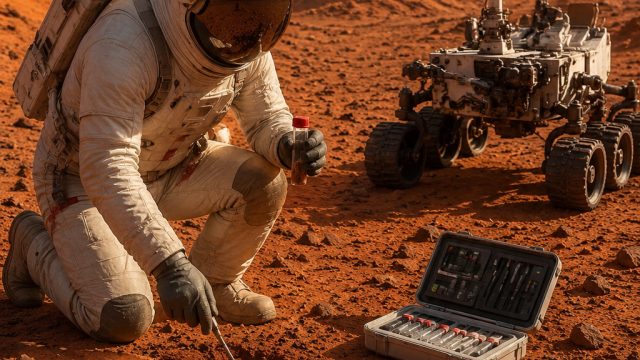
The quest to uncover the secrets of Mars has taken a significant leap forward with the latest discoveries made by NASA's Perseverance rover. In a thrilling development, scientists have reported detecting complex organic carbon compounds in Martian rocks, hinting at the possibility of ancient microbial life existing on the planet. This ground-breaking finding not only enhances our understanding of Mars but also raises profound questions about life beyond Earth.
The Significance of Organic Carbon in Martian Rocks
Organic carbon is a crucial element in the chemistry of life as we know it. The presence of these compounds on Mars suggests that the planet may have once harbored conditions suitable for life. NASA's Perseverance rover, equipped with sophisticated scientific instruments, has analyzed samples from regions like Cheyava Falls, revealing significant biosignatures. This discovery is pivotal as it indicates that ancient water and chemical reactions played a role in shaping the Martian landscape.
What the Findings Mean for Future Mars Exploration
- Potential for Past Life: The detection of organic carbon bolsters theories that life may have existed on Mars millions of years ago.
- Future Missions: The findings set the stage for future exploratory missions aimed at searching for direct evidence of life.
- ExoMars Mission: Upcoming missions, such as ExoMars, will focus on not just finding organics but also distinguishing their “handedness,” a key factor in determining biological origin.
Implications of This Discovery
The implications of finding complex carbon compounds are vast. For scientists, it offers a new lens through which to examine Mars’ geological history and its potential to support life. For enthusiasts of space exploration, it reignites excitement about our neighboring planet and the mysteries it holds. The insights gathered from Perseverance could provide the foundation for understanding whether we are alone in the universe or part of something much larger.
How This Relates to Current Scientific Endeavors
As we delve deeper into the Martian soil, scientists also reflect on how these discoveries align with other ongoing endeavors in the field. For instance, advancements in carbon analysis techniques allow researchers to explore not just Mars but also other celestial bodies, including the icy moons of Jupiter and Saturn, which could also harbor life. Moreover, understanding Mars' past could offer clues about Earth’s own geological and biological evolution.
What’s Next for NASA and the Perseverance Rover?
Nasa's plan for the Perseverance rover includes continued exploration and collection of samples that may provide more concrete evidence of ancient life. The rover is set to travel across various terrains, analyzing rocks and soil while sending data back to Earth for further study. As these missions progress, the scientific community is eager to see what other secrets Mars may reveal about its past.
Preparing for the Future of Mars Exploration
- Advancing Technology: Investment in technology will be crucial for future missions, improving our ability to analyze samples.
- Collaborative Efforts: International collaboration will enhance our understanding of Mars and accelerate the search for life.
- Public Engagement: Engaging the public through educational initiatives will help create a more informed audience about the importance of these missions.
Conclusion: A New Era in Martian Research
The ongoing research and discoveries made by the Perseverance rover mark a significant milestone in our exploration of Mars. The detection of complex carbon compounds not only raises the tantalizing possibility of ancient life on the Red Planet but also paves the way for future explorations and discoveries. As scientists continue to analyze these findings, they may soon uncover the answers to some of humanity’s most profound questions: Are we truly alone in the universe? The journey of discovery is just beginning, and the world watches with bated breath for what Mars will reveal next.

 published on 2026-07-11